

Founder & Executive Director
Zandra Ashley
Faith. Education. Justice.
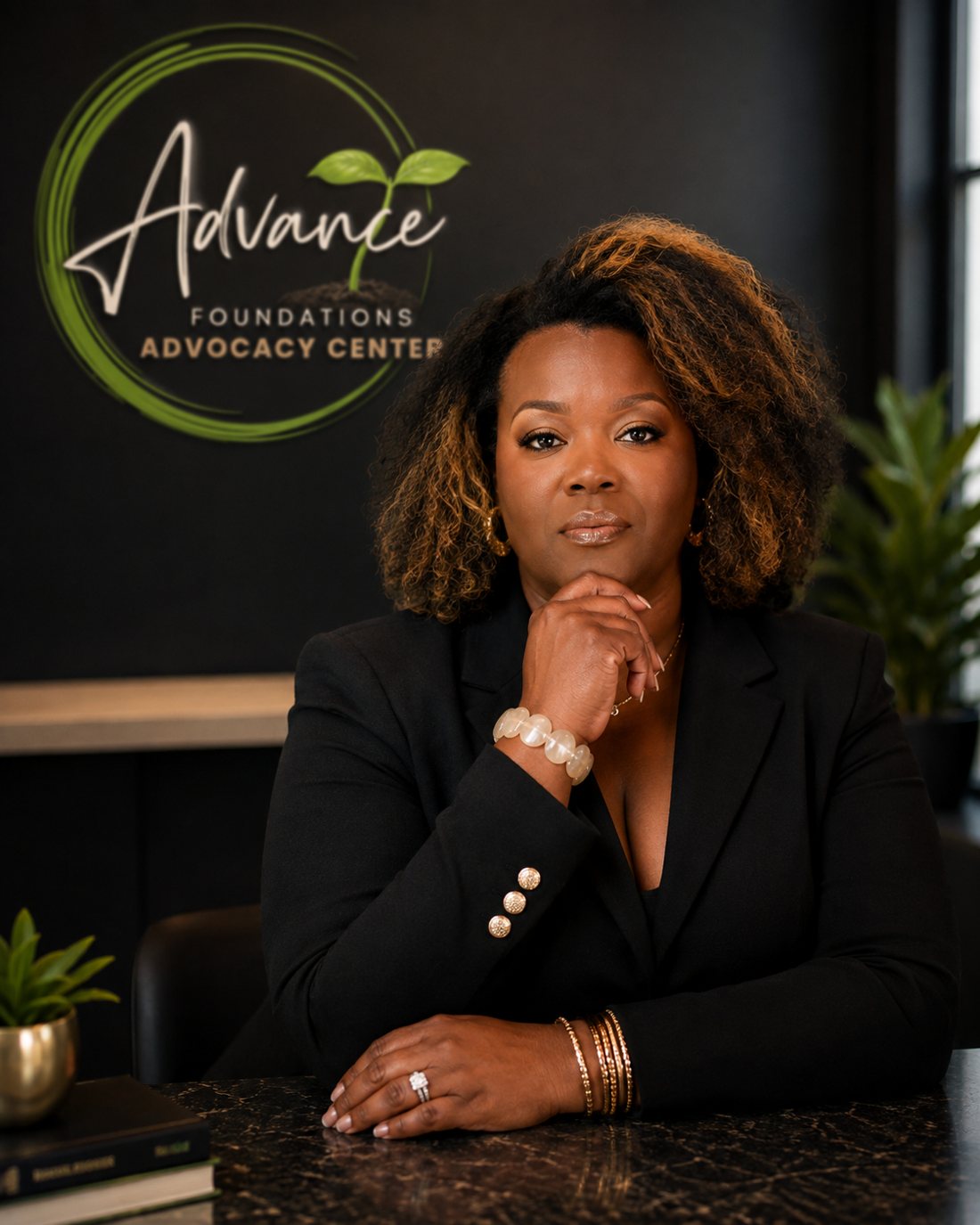
Zandra Ashley is a faith-driven education advocate, nonprofit founder, policy reformer, and community leader committed to educational equity, student rights, family empowerment, and justice. A devoted wife and mother of three, her advocacy is deeply rooted in both her personal experiences as a parent and her belief that every child deserves access to a high-quality education, regardless of race, disability, socioeconomic status, or circumstance.
As the mother of two children with disabilities, Zandra's advocacy is also deeply personal. She has had to learn, and continues to learn, how to navigate school systems, healthcare needs, community resources, policies, services, and society while advocating for the individual needs of her children. Along that journey, she discovered that one of the greatest challenges families face is not simply finding services, but gaining the knowledge necessary to understand systems, ask the right questions, recognize barriers, know their rights, and effectively advocate for their children.
Her experiences also revealed a broader need for education and awareness surrounding disabilities themselves. Families, educators, communities, and institutions need opportunities to better understand how health challenges, neurological disabilities, developmental disabilities, physical disabilities, and other exceptionalities can affect a child's learning, communication, behavior, independence, access, and participation in everyday life.
For Zandra, this became one of the missing pieces of the puzzle: education.
The more she learned to advocate for her own children, the more she recognized the need to help other families gain that same knowledge.
Zandra is the Founder and Executive Director of Advance Foundations Advocacy Center (AFAC), a faith-driven nonprofit organization dedicated to empowering families, protecting student rights, and advancing equitable educational opportunities for children and young adults.
She founded AFAC to help close the gap between what families are expected to know and what they have actually been taught about their rights, resources, options, and ability to advocate for their children.
At the heart of her work is a simple belief: families should not have to become education experts just to make sure their children receive the education, services, support, and opportunities they deserve.
The Missing Piece of the Puzzle
As a mother of children with disabilities and an advocate for students with exceptionalities and their families, Zandra has come to understand that special education is a service, not a place.
That belief shapes how she approaches inclusion and advocacy.
Rather than focusing primarily on where a child is educated, Zandra believes we must also ask: What does this child need to learn, participate, communicate, develop, and thrive? Are the appropriate supports and services actually being provided? Is the child meaningfully included? Does the family understand its rights and have a genuine voice in the process?
The history of disability in America also informs her work. Generations of individuals with disabilities experienced exclusion, institutionalization, segregation, discrimination, and policies rooted in misunderstanding and fear. The development of federal protections, including the Individuals with Disabilities Education Act (IDEA), transformed educational rights for children with disabilities, but laws alone cannot create true inclusion.
Zandra believes exclusion gives fear, misunderstanding, misrepresentation, and mistreatment room to grow.
When children and adults with disabilities are intentionally included in our schools, communities, conversations, decisions, policies, practices, and events, differences become less unfamiliar. People have opportunities to learn from one another, barriers begin to come down, and inclusion becomes part of everyday life rather than an exception.
And ultimately, it comes back to education.
Education is one of the most powerful tools we have for understanding one another. Educating families about their rights matters. Educating communities about disabilities matters. Educating students to understand and respect differences matters. Educating ourselves about how to better support and include individuals with disabilities is a piece of the puzzle that is too often missing.
Building an Advocacy Center for Families
Under Zandra's leadership, Advance Foundations Advocacy Center is being developed as more than an organization families contact when something goes wrong. AFAC is designed to be a place where families can learn, prepare, connect, advocate, and grow.
AFAC supports families from early childhood through young adulthood, with particular attention to students and families who may experience barriers because of disability, economic circumstances, lack of information, or unequal access to educational opportunities.
The organization's work includes parent education and advocacy support, IEP and 504 guidance, special education resources, student and parent rights education, family support, scholarships, youth leadership development, community education, training, and connections to additional resources and services.
AFAC also works to help families understand how educational systems operate, not simply what to do after a problem occurs. Zandra believes informed families are better equipped to ask questions, recognize concerns, participate meaningfully in decisions, collaborate with educators, and hold systems accountable when necessary.
KNOW-ledge as a Foundation
One of Zandra's central philosophies is that knowledge is liberation.
Through AFAC's KNOW-ledge framework, families and young people are encouraged to move beyond simply receiving information toward truly understanding it. To KNOW means asking questions, examining history and context, researching multiple credible sources, understanding rights and responsibilities, applying what has been learned, correcting misinformation, developing discernment, and eventually being able to teach and advocate for others.
For Zandra, knowledge should lead somewhere.
It should lead to confidence, wisdom, self-advocacy, better decisions, stronger families, and greater freedom.
That philosophy is also behind AFAC's vision for 1-888-KNOW-EDU, an educational resource designed to help students and families gain greater access to information, academic support, resources, and self-advocacy tools.
Advocacy Beyond a Meeting
Zandra believes effective advocacy begins by listening to the family and understanding the whole child.
AFAC's approach is therefore not limited to attending a school meeting or reviewing paperwork. The work begins with understanding a family's story:
What is happening? What does the child need? What has already been tried? What does the family understand about its options? What barriers are preventing progress?
From there, AFAC can help families identify concerns, understand applicable rights and processes, prepare questions, organize documentation, communicate with schools, participate more effectively in educational meetings, and develop a clearer path forward.
When needs extend beyond education, AFAC's broader vision includes helping families connect with community resources and appropriate professional services.
Zandra believes advocacy should not create dependency. The goal is to equip families with the knowledge and confidence to increasingly advocate for themselves.
Developing the Next Generation
Zandra's vision also extends to young people themselves.
Through youth leadership initiatives such as The Living ROOM and The Guard-IN, AFAC is creating opportunities for young people to develop leadership, confidence, creativity, belonging, responsibility, and self-advocacy.
She believes young people need more than academic instruction. They need safe spaces to discover who they are, explore their gifts, ask questions, build healthy relationships, develop their voices, and understand that they have something valuable to contribute to their communities.
Education, in Zandra's view, should prepare young people not simply to pass tests, but to think, communicate, create, lead, advocate, and live with purpose.
Faith. Education. Justice.
Zandra's leadership is deeply rooted in faith. She believes every person has God-given value, gifts, and purpose, and that education can be one of the most powerful tools for helping individuals discover and develop that potential.
Her approach brings together faith, education, advocacy, history, research, family engagement, community partnership, and justice.
She is willing to challenge systems when necessary, but she also believes sustainable change requires relationships, accountability, collaboration, and a willingness to build solutions.
Her work is guided by a conviction that advocacy should do more than identify what is wrong.
It should help build what is right.
At Advance Foundations Advocacy Center, the goal is to empower families, strengthen advocacy, increase awareness of educational rights, and help build inclusive communities where every child is valued, supported, seen, and given equitable opportunities to thrive.
AFAC believes every child deserves dignity, access, belonging, and the opportunity to participate meaningfully in society. Through advocacy, education, collaboration, and faith-driven service, the organization is committed to helping families navigate systems while pushing for lasting change that benefits all children.
Because inclusion is not charity. It is justice. It is humanity. And it is necessary.
And because when families KNOW, they can advocate.
When young people KNOW, they can grow.
When communities KNOW, they can Advance.
Advance Foundations Advocacy Center
Empowering Families. Protecting Student Rights. Ensuring Equitable Education for Every Child.
FAITH. Education. Justice.
Contact Zandra: zandra@advancefoundations.org
Need someone in your corner?
Tell us what's happening. We'll reach out within one business day.